How CRE Analysts Use AI to Compare Landlord Proposals (With a Human Check)
How can commercial real estate analysts use AI to analyze landlord proposals?
Analysts can use an AI agent to read each landlord proposal, pull out the lease economics, such as rent, escalations, concessions, and term, and lay them out in a consistent format for comparison. A person then checks every figure against the source. For Cresa, the agent we built does this in minutes, work that took analysts hours per deal by hand.
Proposal comparison is one of the clearest examples of where AI helps in commercial real estate. The work is necessary, repeated on every deal, and mostly about reading carefully and putting numbers in the right place. It is also work where a mistake is expensive. Both facts shape how the agent should be built and how the team should use it.
Why is comparing landlord proposals so time-consuming?
Each landlord formats a proposal differently. Base rent might be quoted one way in one document and another way in the next. Escalations, free rent, improvement allowances, and term sit in different places and use different language. Before anyone can compare options for a client, someone has to find each term, normalize it, and line it up side by side.
That is careful, skilled work, but much of it is extraction rather than judgment. The judgment comes afterwards, when the analyst and broker decide what the numbers mean for the client, which proposal is strongest, and where to push back in negotiation. An agent that handles the extraction gives people more time for the part only they can do.
What does the Cresa landlord proposal analysis agent do?
It extracts lease economics from landlord proposals and presents them in a structured, comparable way. We built it in ChatGPT Enterprise for Cresa, inside the enterprise workspace the firm already licenses. Analysts now get the economics out of a proposal in minutes. Done by hand, the same work took hours per deal. Analysts still review every figure.
The agent is one of three we built with Cresa's team, alongside an RFP drafting agent and a prospect research and briefing agent. All three run inside a governed, IT-approved enterprise agent workspace. You can see how they fit together on our AI agents for commercial real estate page.
Should AI be trusted to extract lease terms without review?
No. A wrong rent figure or a missed concession matters too much to skip the check. The agent produces a first pass, and an analyst confirms each number against the source proposal before it goes into a comparison or to a client. The time saved comes from not retyping, not from removing the person who is accountable for the numbers.
AI models can misread a table, confuse two similar terms, or fill a gap with something that looks plausible. These errors become less common when the agent has clear instructions and good examples, but they do not disappear. Teaching analysts to spot them is part of the build, not an afterthought.
How should the review step work in practice?
Make the review fast by design. Ask the agent to show where each figure came from in the source document, flag anything it could not find, and never guess. The analyst then checks the extracted terms against the proposal, corrects anything wrong, and only then builds the comparison. Over time, the corrections show where the instructions need tightening.
These are the design choices we recommend for any proposal analysis agent:
- Source references. Each extracted term should point back to where it appears in the proposal, so checking takes seconds rather than a full reread.
- Explicit gaps. If a term is missing or unclear, the agent should say so rather than fill in a value.
- A fixed output format. The same fields in the same order for every proposal makes side-by-side comparison and review easier.
- A short correction log. Note what the agent got wrong. Champions use that list to improve the instructions and examples.
What data rules apply when using AI on landlord proposals?
Proposals contain client terms and deal economics, so they belong only in the firm's governed enterprise AI workspace, never in free personal accounts. At Cresa, the agents run inside an IT-approved enterprise agent workspace in ChatGPT Enterprise. Everyone using an agent should know which tools are approved and what information can go into them.
Getting people off personal AI accounts is often one of the first practical wins of a program like this. When the approved tool does the job well, there is less reason to reach for an unapproved one.
Do you need special CRE software to do this?
Usually not. If your firm already licenses ChatGPT Enterprise, Claude, Microsoft Copilot, or Google Gemini, a proposal analysis agent can be configured inside that workspace. That is how Cresa's agent was built. It means no new vendor and no new data path for IT to govern. Specialist CRE platforms can still make sense for some narrow, standard tasks.
A simple way to think about the options:
- Configured agents suit firm-specific workflows where your house format and your way of comparing deals matter.
- Off-the-shelf tools suit one narrow task that is the same across many firms.
- Custom software suits deep integration with internal systems at scale.
Most firms we talk to start with a configured agent, because it can be built quickly in a tool people already have and adjusted as the team learns.
How do you get analysts to actually use a proposal analysis agent?
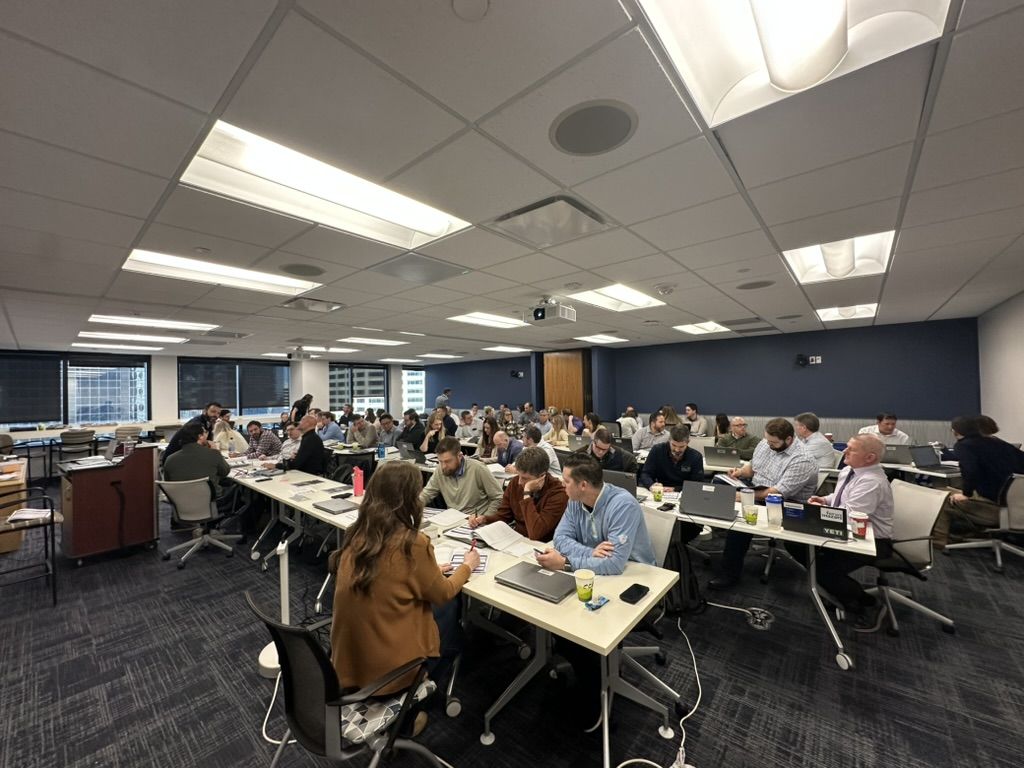
Train them on their own live deals. At Cresa, we taught sessions built on the firm's real deal cycles, so people ran the agent on proposals they were already working on and learned to check its output. Trust grows when people see the agent handle a real proposal and catch its mistakes themselves, rather than being told it works.
Before any of that, we baselined the growth and finance teams with SINA, our AI literacy platform, so we knew how comfortable each person was judging AI output. A small group of champions then owns the agent, improves its instructions, and carries it to the next team or office. Our AI champions program page explains how that group works. For the wider picture of AI in the sector, see AI training for commercial real estate.