Generative AI for financial services governed from day one
Banks, insurers, wealth and asset managers and fintech companies want the productivity of generative AI without new risk. Clustr starts with governance: safe-use rules set with IT, risk and compliance teams, clear data handling, and human review on every output. Then we train each role on its real work and measure the change.
How can financial services firms use generative AI safely?
Financial services firms use generative AI safely by starting with governance: approved tools, clear rules on what data may go in, mandatory human review, and a record of what AI helped produce. Within those rules, AI drafts client communications, summarizes research and policy documents, prepares meeting briefs and explains reports, while people make every decision.
Clustr Innovations, a human-first AI enablement consultancy, helps financial services teams adopt generative AI this way. Programs start with a SINA baseline of AI fluency, set safe-use rules with IT, risk and compliance teams, run role-based sessions, build a small set of reviewed workflows, and re-measure at the end.
Clustr does not certify regulatory compliance. Your risk, compliance and model risk teams own those decisions; programs are designed to work inside them.
What does a governed generative AI workflow look like in financial services?
Two workflows of the kind a financial services program builds first. Both use approved tools only, keep restricted data out unless policy allows it, and require a named person to review and approve before anything is used.
- TriggerClient review scheduled
A planned meeting with an existing client.
- InputApproved notes + commentary
Only data the firm's policy allows in the tool.
- AI stepDraft the brief
Summary, open items and suggested questions.
- Human reviewAdvisor reviews
Checks accuracy and decides what to raise.
- OutputMeeting brief
Filed with the client record.
- TriggerProcedural question
How a process or policy applies.
- InputInternal policies
Approved procedures in an approved tool.
- AI stepDraft answer with citations
Points to the exact policy sections.
- Human reviewPolicy owner confirms
A named person checks the citation.
- OutputLogged answer
Recorded for audit and future reuse.
Why is generative AI adoption slow in financial services?
Generative AI adoption is slow in financial services because the cost of a mistake is high. Client data rules, model risk expectations and review requirements are strict, and most AI training ignores them, so firms either block AI or allow it without clear controls.
Data handling uncertainty
Employees do not know which tool is approved or what client, account or deal data may go into it. Uncertainty leads to either avoidance or unsafe use.
Model risk and review
Risk teams need to know where AI is used, what it produced and who checked it. Ad hoc use makes that impossible to show.
Shadow AI
When approved tools lag behind, people use personal accounts. Clear rules and good approved options reduce that pressure.
Training without governance
Generic AI courses teach prompting but not the firm's rules. Training has to teach the policy and the practice together.
What does a governed generative AI program for financial services include?
A financial services program follows Clustr's standard sequence with governance first: measure where people start, set safe-use rules with risk and compliance, train each role on its own work, build reviewed workflows, and measure again.
Baseline
A SINA assessment measures AI fluency by person and function, and an intake maps where AI is already being used.
Safe-use rules
Agree approved tools, data classes allowed in each, mandatory review points and record-keeping, with IT, risk, compliance and model risk teams.
Role-based sessions
Hands-on sessions for relationship, operations, finance, risk and technology teams, each on approved internal material.
Workflow builds
Build a small number of reviewed workflows, such as meeting briefs or policy search, each with a named owner and reviewer.
Champions and re-measure
Name Champions in each function, track workflows in Marina, and re-assess with SINA at the end.
On the AI tools your firm already approves
We teach on Microsoft Copilot, ChatGPT, Claude or Gemini, only in the enterprise versions your firm has licensed and approved. We never ask employees to use personal accounts or to put restricted data into a tool your policy does not allow.

Governance first, measured with SINA
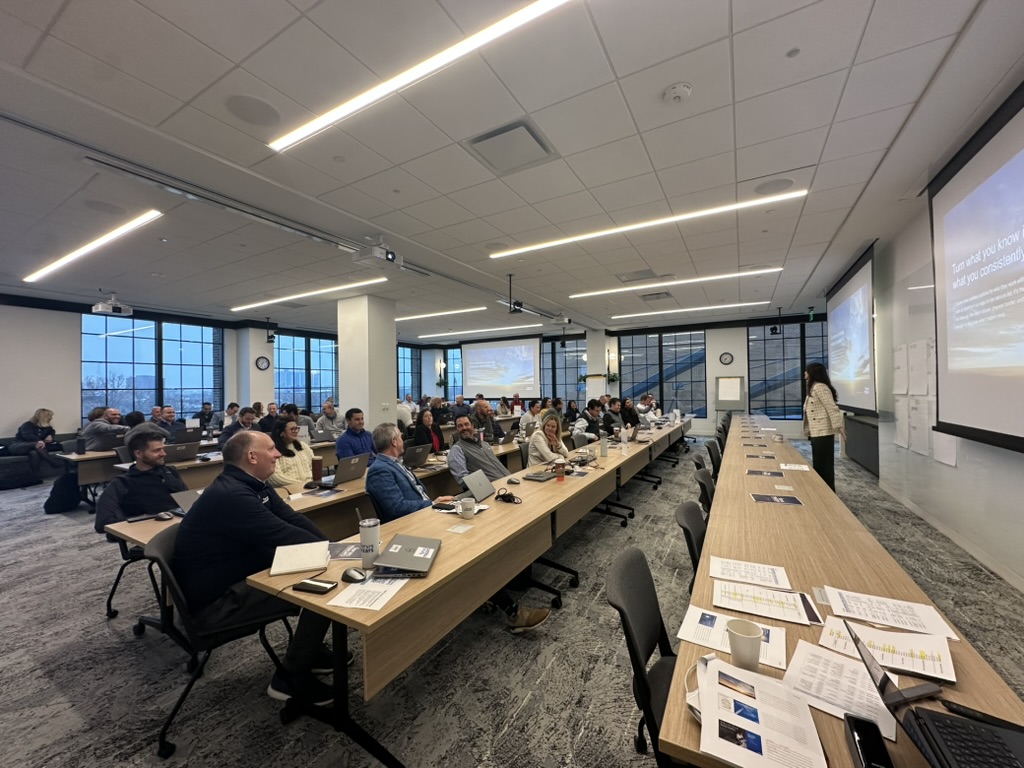
Clustr's programs are in-person first and hybrid by design, typically about 90 days. For a publicly listed energy shipping company, we ran an AI North Star Workshop with R Cubed that put governance and intake first, then broadened Microsoft Copilot adoption. Forvis Mazars, a 40,000-person accounting and professional services firm, trained 300+ professionals in CPE-accredited Copilot workshops. Financial services programs use the same governance-first approach.
Trusted by teams at


















Generative AI for Financial Services, answered directly
Updated October 2026
What are the best generative AI use cases in financial services?
Common starting points are drafting client communications, preparing meeting briefs, summarizing research and policy documents, searching internal procedures, and explaining reports. Each uses approved tools and approved data only, with a person reviewing every output. Clustr Innovations builds these workflows with the people who own them.
How do you handle client data and confidentiality?
Programs set rules first, with IT, risk and compliance teams: which enterprise tools are approved, what data classes may go into each, and where review is mandatory. Clustr Innovations teaches inside those rules and never asks staff to use personal accounts or restricted data.
Does Clustr make our AI use compliant with regulations?
No. Compliance decisions belong to your risk, compliance and legal teams. Clustr Innovations helps set practical safe-use rules with those teams, trains employees to follow them, and gives leaders visibility into where AI is used, so the firm's own governance has something concrete to oversee.
How does generative AI fit with model risk management?
Model risk teams need to know where AI is used, for what, and who reviewed the output. Clustr Innovations builds workflows with named owners and reviewers, and Marina, Clustr's AI operating system dashboard, gives leaders a view of AI use cases and adoption across the firm.
How do you measure whether AI training worked?
With SINA, Clustr's AI literacy platform. Everyone is assessed before training and again at the end on the same five dimensions, scored 0 to 100. Each person also builds and presents one reviewed workflow on their own work in a capstone.
We use cookies
We use cookies and Google Analytics to understand how visitors use our site. Privacy Policy