Generative AI for shipping and energy with governance first, then adoption
Shipping and energy companies often have several AI pilots running at once: Microsoft Copilot, a cloud provider's proof of concept, and AI arriving inside a new ERP. Clustr helps ship and shore teams set one direction, put governance and intake in place, and train people to use approved AI tools on their real work.
How can shipping and energy companies use generative AI?
Shipping and energy companies get the most from generative AI on document-heavy shore work: summarizing charter parties and voyage correspondence, drafting compliance and audit responses, searching technical manuals and inspection findings, preparing management reports and explaining ERP data. AI drafts, searches and summarizes; chartering, technical and compliance people make every decision.
Clustr Innovations, a human-first AI enablement consultancy, starts with strategy and governance when pilots are already running in parallel, then trains teams by role. For a publicly listed tanker operator, our AI North Star Workshop with R Cubed set governance and intake first and tied Oracle's AI to the company's Oracle Fusion ERP rollout.
What does a generative AI workflow look like in shipping?
Two workflows of the kind a shipping or energy program builds first. Both run on shore, keep a person as the reviewer and use documents the team already has, so nothing is connected to vessel or operational systems.
- TriggerNew fixture
A charter is agreed and the recap arrives.
- InputCharter party + recap
The contract text and fixture recap.
- AI stepDraft clause summary
Key terms, laytime, dates and obligations listed.
- Human reviewChartering review
The chartering manager checks every point.
- OutputOperations brief
A one-page summary for the voyage team.
- TriggerInspection report
A vetting or audit report is received.
- InputReport + past findings
Exported findings and company procedures.
- AI stepDraft observations list
Grouped findings, similar past cases, draft owners.
- Human reviewSuperintendent decides
Judgment on cause, priority and action.
- OutputClose-out plan
Actions and owners, ready for tracking.
Why is generative AI hard to adopt in shipping and energy?
Generative AI is hard to adopt in shipping and energy because pilots start in parallel without shared governance, teams are split between ships and shore offices in several countries, and new ERP platforms bring their own AI features on their own timeline.
Parallel pilots, no intake
Copilot, a cloud proof of concept and ERP AI often run at the same time, with no single process for proposing use cases or tracking value.
Ship and shore, many countries
Crews, technical teams and commercial staff work in different places and on different schedules. One generic course does not reach them all.
Compliance-heavy documents
Charter parties, inspection reports and audit evidence carry real consequences. People need clear rules on what AI may draft and what a person must check.
ERP AI on its own timeline
AI features inside a new ERP land with the rollout. Without a plan, they arrive as one more pilot instead of part of the program.
What does a generative AI program for a shipping company include?
A shipping and energy program follows Clustr's standard sequence, with governance up front: measure where people start, agree safe-use rules and intake, train each team on its own documents, build a few workflows with owners, and measure again.
Baseline
A SINA assessment measures AI fluency by person and team, ship and shore, before any training starts.
Safe-use rules
Set governance and intake with IT, compliance and business leads: which approved tool for which data, what AI may draft, and where review is mandatory.
Role-based sessions
Hands-on sessions for chartering, operations, technical management, compliance, finance and fleet personnel teams, each on its own documents.
Workflow builds
Build a small number of workflows, such as charter party summaries or inspection follow-ups, with the people who own them.
Champions and re-measure
Name an AI Steward or Champion in each business unit, then re-assess with SINA to show how far people moved.
On the AI tools your IT team already approves
We teach on Microsoft Copilot, ChatGPT, Claude or Gemini, whichever your company has licensed and approved, and plan ERP AI alongside the ERP rollout. Training uses exported documents and approved connectors only; we never connect AI to vessel, navigation or control systems.

An AI North Star for a global energy shipping company
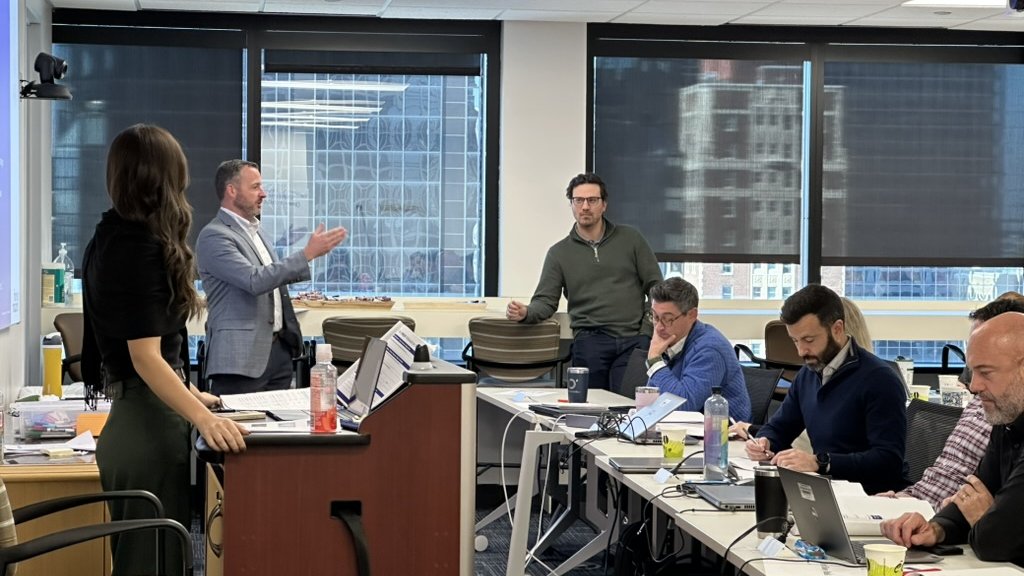
A publicly listed tanker operator had Microsoft Copilot rolling out globally, a Google AI proof of concept and Oracle AI arriving with a new Oracle Fusion Cloud ERP. With R Cubed, we ran our AI North Star Workshop in June 2026. The company put governance and intake first, turned its IT Governance Council into an AI Operating Council with an AI Steward per business unit, routed Oracle AI through the ERP rollout, and broadened Copilot adoption.
Trusted by teams at




















Generative AI for Maritime and Energy, answered directly
Updated October 2026
What are the best generative AI use cases for shipping companies?
The quickest wins are shore-side document work: summarizing charter parties and voyage correspondence, drafting audit and compliance responses, searching technical manuals and inspection findings, preparing management reports, and explaining ERP data in plain language. Clustr Innovations keeps a person responsible for every decision, with AI drafting, searching and summarizing.
Should a shipping company start with AI training or AI governance?
If several pilots are already running, start with governance and intake. Clustr Innovations did this with a publicly listed tanker operator: an AI Operating Council, an AI Steward per business unit, and one intake process. Role-based training then builds on clear rules, so adoption spreads without new risk.
How does Oracle Fusion AI fit into a shipping company's AI plan?
Treat ERP AI as part of the ERP rollout, not a separate pilot. In Clustr's work with a global energy shipping company and R Cubed, Oracle AI was routed through the Oracle Fusion Cloud ERP program, so finance and operations teams meet it with the new processes rather than as one more tool.
Is generative AI connected to vessels or operational systems?
No. Clustr Innovations trains shore and fleet support teams to use approved AI tools on exported documents and approved connectors only. Programs set safe-use rules with IT and compliance teams, and AI is never connected to vessel, navigation, plant or control systems. People review every output before it is used.
How do you track AI adoption across ship and shore teams?
Clustr uses SINA, its AI literacy platform, to baseline and re-assess people on five dimensions. Marina, Clustr's AI operating system dashboard, keeps an inventory of AI tools and use cases, intake, a roadmap, owners, spend and ROI, so leaders see one picture across business units and countries.
We use cookies
We use cookies and Google Analytics to understand how visitors use our site. Privacy Policy