Generative AI for media and entertainment for content and sales teams
Broadcasters, publishers and agencies have two places generative AI can help: the content workflow and the sales team that funds it. Clustr trains producers, editors, marketers and media sellers to use AI on their real work, with editors and sellers making every call, in the tools your company already approves.
How can media and entertainment companies use generative AI?
Media and entertainment companies use generative AI in two places: content workflows, such as research, first drafts, versioning for different channels, transcripts and asset organization; and media sales, such as account research, meeting prep and proposal drafts. Editors and sellers stay responsible for what is published and promised; AI drafts, searches and summarizes.
Clustr Innovations, a human-first AI enablement consultancy, trains media teams to do this on their own content and accounts. Programs start with a SINA baseline of AI fluency, set rules for editorial standards and rights, run role-based sessions, build workflows with the people who own them, and re-measure at the end.
What does a generative AI workflow look like in media?
Two workflows of the kind a media program builds first: one for content teams, one for media sales. Both keep an editor or seller as the reviewer and start from material the team already owns or has the rights to use.
- TriggerApproved piece ready
A story, segment or campaign signed off.
- InputSource + style guide
The approved content and house style.
- AI stepDraft channel versions
Web, social, newsletter and promo copy.
- Human reviewEditor reviews
Checks facts, tone, rights and standards.
- OutputScheduled versions
Published under the editor's sign-off.
- TriggerAdvertiser meeting booked
A new or returning local business.
- InputPublic info + account history
Website, news and past campaigns.
- AI stepDraft brief and questions
Goals, likely needs and who else to involve.
- Human reviewSeller decides approach
Owns the relationship and the pitch.
- OutputBrief + proposal outline
Ready before the meeting.
Why is generative AI adoption hard in media and entertainment?
Generative AI adoption is hard in media and entertainment because editorial trust, rights and brand voice are on the line with every piece, teams are spread across markets and shifts, and sales teams rarely get training built for how media is sold.
Editorial standards and trust
Audiences expect accuracy. Teams need clear rules on what AI may draft, what must be checked, and what is disclosed.
Rights and brand voice
Content, footage and talent carry rights. People need to know what material may go into which tool, and how to keep the house style.
Spread across markets
Stations, titles and offices run on different schedules. One central training session rarely reaches everyone or sticks.
Media sellers left out
Sales teams that fund the newsroom often get generic AI training. They need practice on meeting prep, account research and proposals.
What does a generative AI program for a media company include?
A media program follows Clustr's standard sequence, adapted to content and sales roles across markets: measure where people start, set editorial and rights rules, train each role on its own work, build a few workflows, and measure again.
Baseline
A SINA assessment measures AI fluency by person, role and market before any training starts.
Safe-use rules
Agree approved tools, what content and data may go into them, editorial review and disclosure, with editorial leaders, legal, IT and compliance teams.
Role-based sessions
Short, tailored microtrainings for producers, editors, marketers and media sellers, delivered by region where teams are spread out.
Workflow builds
Build a small number of workflows, such as content versioning or advertiser meeting prep, with the people who own them.
Champions and re-measure
Name Champions in each market, run office hours, then re-assess with SINA and capstone presentations.
On the AI tools your company already approves
We teach on Microsoft Copilot, ChatGPT, Claude or Gemini, whichever your company has licensed and approved. Training uses content and data your policies allow in those tools.

Media sales and content teams we have trained
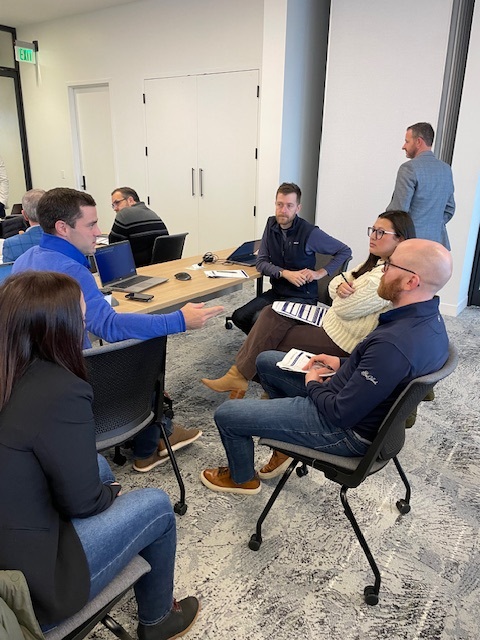
For Gray Media, a national broadcast media company, Clustr ran multi-regional sales enablement: tailored AI microtrainings across 12 regions covering meeting prep, identifying champions and LinkedIn practice, plus weekly national office hours and 1:1 sessions.
Trusted by teams at




















Generative AI for Media and Entertainment, answered directly
Updated October 2026
What are the best generative AI use cases in media and entertainment?
For content teams: research, first drafts, versioning for web, social and newsletters, transcripts and asset organization. For media sales: advertiser research, meeting prep and proposal drafts. Clustr Innovations builds these workflows with the people who own them, and editors or sellers review every output.
How do you protect editorial standards when using AI?
Programs agree rules with editorial leaders, legal and IT before training: approved tools, what material may go in, what AI may draft, where review is mandatory and how use is disclosed. Clustr Innovations teaches inside those rules, and an editor signs off on everything published.
Do you train media sales teams?
Yes. For Gray Media, a national broadcast media company, Clustr Innovations ran tailored AI microtrainings for sales teams across 12 regions, covering meeting prep, identifying champions and LinkedIn practice, plus weekly national office hours and one-on-one sessions.
How do you train teams spread across many markets?
With short, tailored microtrainings delivered region by region, weekly office hours and one-on-one sessions, and Champions named in each market so practice continues locally. Clustr Innovations programs are in-person first and hybrid by design, so distributed teams are not left out.
How do you measure whether AI training worked for a media company?
With SINA, Clustr's AI literacy platform. Everyone is assessed before training and again at the end on the same five dimensions, scored 0 to 100. Each person also builds and presents one workflow on their own content or accounts in a capstone.
We use cookies
We use cookies and Google Analytics to understand how visitors use our site. Privacy Policy