Generative AI for professional services on real client work
Consulting, accounting, legal, engineering and advisory firms sell expertise by the hour and by the deliverable. Clustr trains partners, managers and staff to use generative AI on research, drafting, review and client communication, in the AI tools the firm already approves, with clear rules on client data and professional judgment.
How can professional services firms use generative AI?
Professional services firms use generative AI on the research, drafting and review that fill most of the working day: summarizing documents and regulations, drafting proposals, memos and reports, preparing for client meetings, reconciling and explaining spreadsheets, and turning notes into follow-ups. Professionals stay accountable for every deliverable; AI drafts, searches and summarizes.
Clustr Innovations, a human-first AI enablement consultancy, trains professional services teams to do this on their own engagements. Programs start with a SINA baseline of AI fluency, set client-data rules with IT and risk teams, run role-based sessions by practice and level, build workflows with the people who own them, and re-measure at the end.
What does a generative AI workflow look like in a professional services firm?
Two workflows of the kind a professional services program builds first. Both start from documents the firm already has and keep a qualified professional as the reviewer before anything reaches a client.
- TriggerNew opportunity
A client request or RFP arrives.
- InputRequest + past proposals
Approved templates, credentials and scope language.
- AI stepDraft approach and scope
Structure, assumptions and open questions.
- Human reviewEngagement lead edits
Owns the approach, team and price.
- OutputClient-ready proposal
Sent after partner sign-off.
- TriggerDocuments received
Contracts, statements or reports to review.
- InputClient documents
Loaded into an approved tool only.
- AI stepSummarize and flag
Key terms, figures and inconsistencies.
- Human reviewProfessional checks
Verifies every flag against the source.
- OutputReview memo
Filed with the engagement record.
Why is generative AI adoption hard for professional services firms?
Generative AI adoption is hard for professional services firms because client confidentiality, professional standards and billable-hour pressure all make people cautious, and generic training rarely shows AI on the documents and deliverables the firm actually produces.
Client data and confidentiality
Professionals need to know exactly which tool is approved and what client information may go into it. Without that, many simply avoid AI.
Accountability for every deliverable
A wrong figure or citation reaches a client under the firm's name. Teams need habits for checking AI output against the source.
No time to learn
Billable targets leave little room for training. Sessions have to use live work and pay back quickly, ideally with CPE credit where it applies.
Partners and staff at different starting points
Adoption often starts with junior staff while partners stay unsure. Programs need sessions for each level, not one generic course.
What does a generative AI program for a professional services firm include?
A professional services program follows Clustr's standard sequence, adapted to practices and levels: measure where people start, set client-data rules, train each practice on its own work, build a few workflows with owners, and measure again.
Baseline
A SINA assessment measures AI fluency by person, practice and level before any training starts.
Safe-use rules
Agree which tools are approved, what client data may go into them, and where review is mandatory, with IT, risk and compliance teams.
Role-based sessions
Hands-on sessions by practice and level, each on that team's own engagements, with CPE accreditation where it applies.
Workflow builds
Build a small number of workflows, such as proposal drafting or document review, with the people who own them.
Champions and re-measure
Name Champions in each practice or office, then re-assess with SINA and capstone presentations.
On the AI tools your firm already approves
We teach on Microsoft Copilot, ChatGPT, Claude or Gemini, whichever your firm has licensed and approved. Many firms already run Microsoft 365, so programs often start with Copilot in Word, Excel, Outlook and Teams.

Professional services programs we have delivered
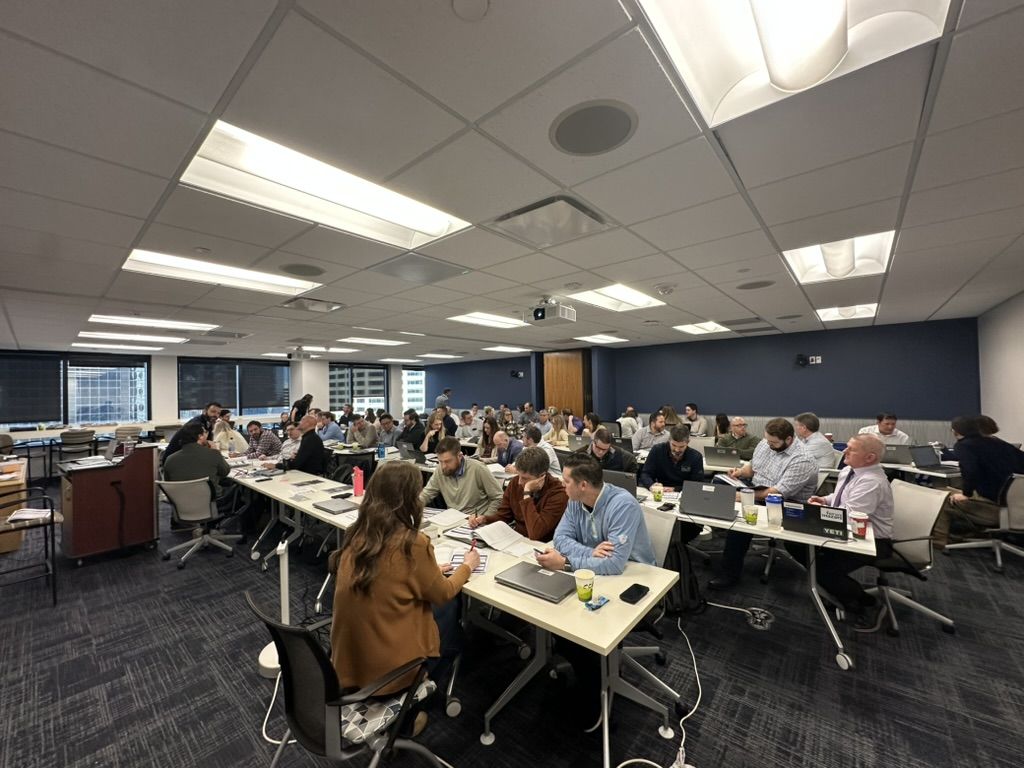
Forvis Mazars, a 40,000-person global professional services and accounting firm, partnered with Clustr on a regional, in-person, CPE-accredited workshop series on Microsoft Copilot that trained 300+ professionals, each earning 4 CPE hours. A 150-person data consulting firm trained 150+ employees on ChatGPT and Copilot and stood up an AI Center of Excellence with our help. At the smallest scale, we coached the owner of a bookkeeping and accounting firm one-on-one with Claude.
Trusted by teams at


















Generative AI for Professional Services, answered directly
Updated October 2026
What are the best generative AI use cases for professional services firms?
The quickest wins are research and document work: summarizing contracts, statements and regulations, drafting proposals, memos and reports, preparing for client meetings, and explaining spreadsheets. Clustr Innovations builds these workflows on each practice's own engagements, with a qualified professional reviewing every output before it reaches a client.
Is generative AI safe to use with client data?
It can be, inside the firm's approved tools and rules. Clustr Innovations sets safe-use rules with IT, risk and compliance teams before training starts: which tools are approved, what client data may go into them, and where review is mandatory. The firm's own policies always take precedence.
Can generative AI training earn CPE credit?
Yes, where the program is set up for it. Clustr Innovations ran a CPE-accredited, in-person workshop series for Forvis Mazars, a 40,000-person professional services and accounting firm, that trained 300+ professionals, each earning 4 CPE hours. Accreditation is scoped with each firm.
Do you work with small firms as well as large ones?
Yes. Clustr Innovations has run regional programs for a 40,000-person firm and company-wide enablement for a 150-person data consulting firm, and has coached the owner of a small bookkeeping and accounting firm one-on-one, from first login to Claude workflows in Excel, QuickBooks reporting and Outlook.
How do you measure whether AI training worked for a firm?
With SINA, Clustr's AI literacy platform. Everyone is assessed before training and again at the end on the same five dimensions, scored 0 to 100. Each person also builds and presents one workflow on their own client work in a capstone, so partners see real use.
We use cookies
We use cookies and Google Analytics to understand how visitors use our site. Privacy Policy