Generative AI for retail and hospitality for the teams behind every guest and customer
Retail, consumer brands, food service and hospitality companies produce a constant stream of content: campaigns, product copy, menus, guest messages, store and site procedures, and training materials. Clustr trains marketing, merchandising, operations and support teams to use generative AI on that work, in the AI tools your IT team already approves.
How can retail and hospitality companies use generative AI?
Retail and hospitality companies get the most from generative AI on content and communication work: drafting campaigns and product descriptions, organizing marketing assets, drafting guest and customer replies, summarizing reviews and feedback, and turning procedures into short training content. AI drafts and summarizes; marketers, managers and service teams decide what goes out.
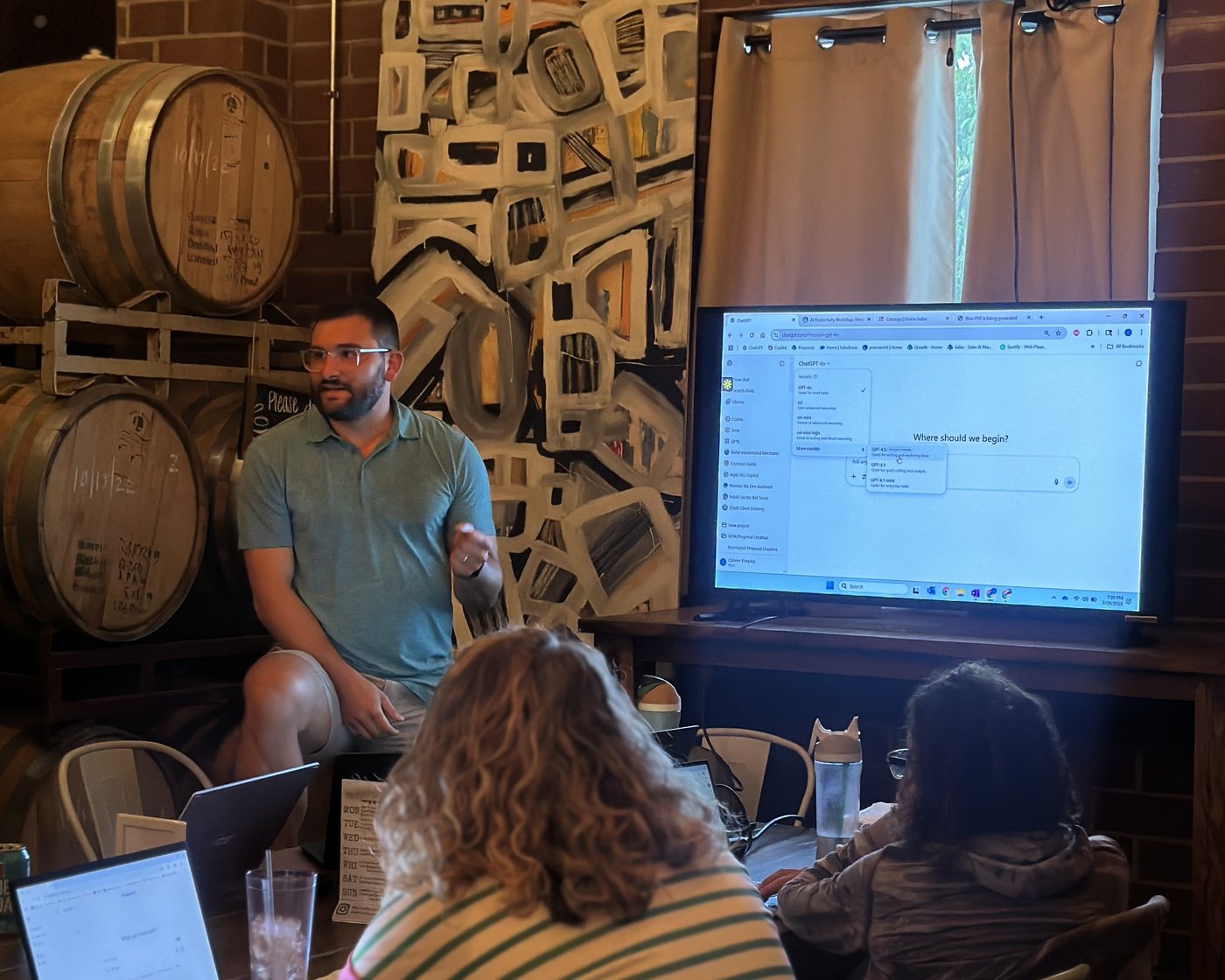
Clustr Innovations, a human-first AI enablement consultancy, trains these teams on their own work, often starting with short microtrainings for one team. For Compass Group USA, tailored microtrainings for the culinary marketing team covered content creation, campaign drafting, asset organization and internal communications, and success there led to expansion into other teams.
What does a generative AI workflow look like in retail and hospitality?
Two workflows of the kind a retail or hospitality program builds first. Both keep a person as the reviewer before anything reaches a guest or customer, and both use content and feedback the team already has.
- TriggerCampaign brief
A seasonal promotion or menu launch is approved.
- InputBrief + brand guide
Goals, offer details and past campaigns.
- AI stepDraft copy variations
Email, social and in-store versions.
- Human reviewMarketer approves
Checks claims, offers and brand voice.
- OutputCampaign assets
Final copy handed to design and channels.
- TriggerWeekly review cycle
Feedback from the past week is exported.
- InputReviews + survey comments
Exported text, no payment data.
- AI stepGroup themes, draft replies
Top issues, praise and suggested responses.
- Human reviewManager decides
Chooses actions and approves each reply.
- OutputWeekly brief
Themes and actions for location teams.
Why is generative AI adoption uneven in retail and hospitality?
Generative AI adoption is uneven in retail and hospitality because a few office teams experiment while frontline and field teams are left out, brand and guest communications carry reputational risk, and long generic courses do not fit shift-based schedules.
Office-only adoption
Marketing may use AI daily while operations, field and support teams never see it applied to their work.
Brand and guest risk
A wrong offer, allergen claim or tone in a guest message matters. Teams need rules on what AI may draft and what a person must check.
No time for long courses
Shift-based and seasonal teams cannot leave the floor for a full day. Short, focused microtrainings fit the way these businesses run.
Training content that ages fast
Procedures, menus and products change often. Generative AI helps turn updates into short training content, if people know how to use it.
What does a generative AI program for a retail or hospitality company include?
A retail and hospitality program follows Clustr's standard sequence, often starting with one team: measure where people start, set safe-use rules, run short role-based sessions on real work, build a few workflows with owners, and measure again.
Baseline
A SINA assessment measures AI fluency by person and team before any training starts.
Safe-use rules
Agree what customer and guest data can go into which approved tool, what AI may draft, and where a person must review, with IT, legal and brand teams.
Role-based sessions
Short, hands-on microtrainings for marketing, merchandising, operations, guest services and training teams, each on its own work.
Workflow builds
Build a small number of workflows, such as campaign drafting or feedback summaries, with the people who own the process.
Champions and re-measure
Name Champions in each team or region to keep practice going, then re-assess with SINA to show how far people moved.
On the AI tools your IT team already approves
We teach on Microsoft Copilot, ChatGPT, Claude or Gemini, whichever your company has licensed and approved. Training uses exported content and approved connectors only, and payment card data stays out of AI tools entirely.

Microtrainings that started with one team and spread
For Compass Group USA, Clustr delivered tailored microtrainings for the culinary marketing team, covering content creation, campaign drafting, asset organization and internal communications. Success with that team led to expansion into other teams. Programs are in-person first and hybrid by design, and the same approach applies to retail, consumer brand and hospitality teams.
Trusted by teams at




















Generative AI for Retail and Hospitality, answered directly
Updated October 2026
What are the best generative AI use cases in retail and hospitality?
The quickest wins are content and communication tasks: drafting campaigns and product descriptions, organizing marketing assets, drafting guest and customer replies, summarizing reviews and survey feedback, and turning new procedures into short training content. Clustr Innovations keeps a person approving everything before it reaches a guest or customer.
Have you trained food service teams on generative AI?
Yes. Clustr Innovations delivered tailored microtrainings for the culinary marketing team at Compass Group USA, covering content creation, campaign drafting, asset organization and internal communications. Success with that team led to expansion into other teams across the business.
How do you train frontline and shift-based teams on AI?
With short, focused microtrainings built around one task each, scheduled around shifts, with in-person sessions first and a hybrid option for other locations. Clustr Innovations names Champions in each team or region so people have someone nearby to ask once the formal sessions end.
Is it safe to use generative AI for guest and customer communications?
Used for drafting, with a person approving every message, it can be. Clustr Innovations sets safe-use rules with IT, legal and brand teams first: which approved tool to use, what customer data may go into it, and which claims, such as offers or allergens, always need a human check.
How do you measure whether AI training worked for a retail or hospitality team?
With SINA, Clustr's AI literacy platform. Everyone is assessed before training and again at the end on five dimensions: Technical Fluency, Prompt Craft, Evaluative Judgment, Applied Use, and Ethics and Data Care. The workflows built during the program are tracked for adoption.
We use cookies
We use cookies and Google Analytics to understand how visitors use our site. Privacy Policy