How Oracle and IT Consulting Firms Can Use AI to Win More Work
How can Oracle and IT consulting firms use AI to win more work?
Consulting firms win more work with AI when they apply it to business development: researching target accounts in depth, shaping a specific point of view before the first meeting, preparing for multi-stakeholder conversations, and keeping long deals organized. The goal is not more outreach. It is showing up with a sharper understanding of the client's situation than a generic capabilities deck offers.
Firms that implement enterprise software are often well ahead on AI in delivery, because their clients ask about it. Winning the work is a different skill, and it tends to get less attention. Research, positioning, and deal management still happen the way they always have, often squeezed in around billable work. That gap is where our training focuses.
Why is business development different at consulting firms?
Consultancies sell expertise and time, and that shapes everything. Deals run for months across IT, finance, and business owners. Senior consultants often carry business development alongside billable delivery. Many partners offer the same platform expertise, so differentiation comes from understanding the client. And consultants handle confidential client information, so the rules on which AI tools to use matter.
- Long, multi-stakeholder cycles. AI helps most when it keeps account research and deal context organized across the whole cycle, not just at the first touch.
- Seller-doers. People who deliver projects also win them. Training has to fit around billable work and use their real accounts.
- A crowded partner landscape. When several firms can claim the same certifications, the one that understands the client's situation best tends to stand out.
- Confidential client data. Everyone needs to know which AI tools are approved and what belongs in them.
Which AI workflows help consulting firms most in business development?
Five workflows cover most of a consulting firm's sales cycle: account research, configured outreach, meeting preparation, pipeline and deal review, and sharing what works across the practice. Each uses general-purpose AI tools such as ChatGPT, Claude, Microsoft Copilot, or Gemini, whichever the firm has approved. None of them requires connecting AI to client systems or the CRM.
- Account research at scale. Research a target account's systems, priorities, and recent changes, and keep it in a persistent project workspace that gets more useful each time you return to it.
- Configured outreach. Build an outreach tool loaded with your firm's positioning and examples, then write a multi-channel sequence for real accounts.
- Meeting preparation. Before a multi-stakeholder meeting, use a deal-prep thread that gathers context and gets sharper with each turn.
- Pipeline and deal review. Use AI for pipeline health, forecasting discipline, and structured reviews of real open deals.
- Sharing across the practice. Re-measure fluency and pass the workflows that worked to colleagues, so the practice improves rather than one person.
How did professionals from Elire and R Cubed train?
Individual business development and sales professionals from Elire and R Cubed, two Oracle consulting firms, joined our six-week AI-Native GTM Cohort in summer 2026, alongside sellers from RingCentral and Aiven. Neither was a company-wide program. We name these firms because their people trusted us, and we do not report outcome numbers for the cohort.
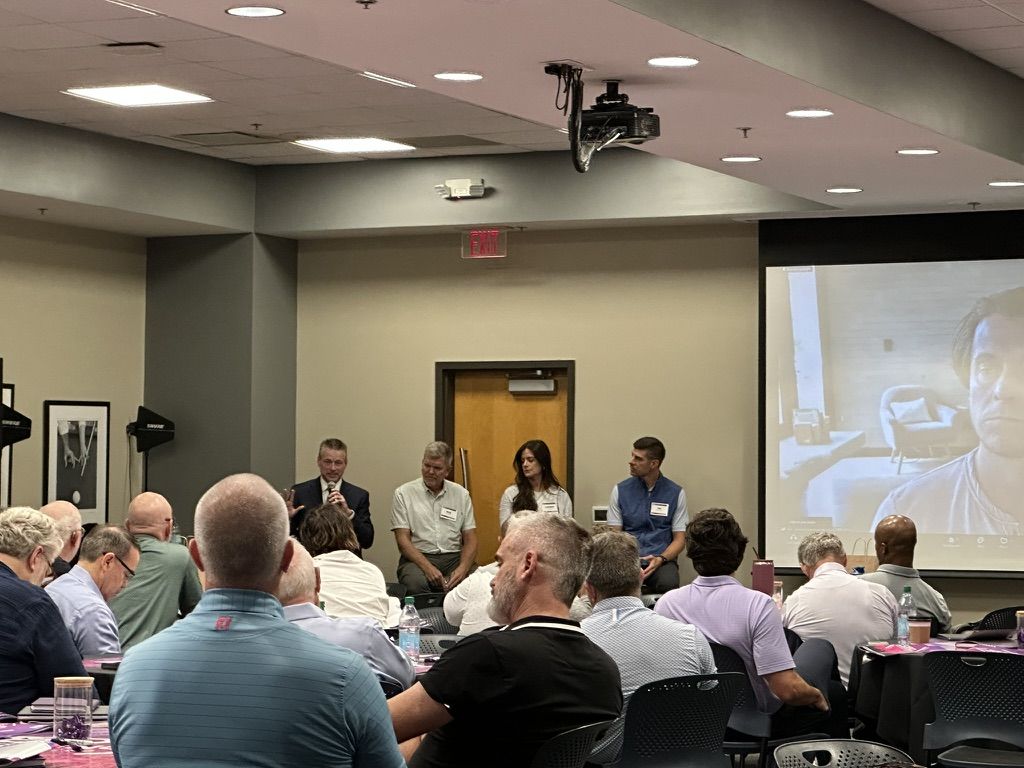
The cohort ran live and virtual from July 21 to August 25, 2026: 11 sessions on Tuesdays and Thursdays at 12pm ET, about 11.5 hours of live time. It was made up of a kickoff, six master trainings, three labs, and a closing showcase. Every lab used a participant's own account or open deal, and each person took a SINA baseline at the start and a re-assessment at the end. SINA is our AI literacy platform. You can read the full program in the AI-Native GTM Cohort case study.
Can consultants who bill full time fit AI training in?
Yes, if the training respects their calendar and uses their real work. The cohort ran two one-hour live sessions most weeks, and every lab used the participant's own accounts, so the time also moved real deals forward. Training that asks billable consultants to practise on invented examples tends to lose to client work, however good the content is.
How should consulting firms handle client confidentiality with AI?
Use only the AI tools the firm has approved, and make sure everyone knows what client information belongs in them. In our training, Clustr never connects to a participant's CRM or client systems. Participants control what they bring into a session, set workflows up in their own approved tools, and cohorts are curated so no two companies compete.
That last point matters for consulting firms in particular. Sellers can talk openly about how they research and pursue accounts when they know nobody else in the room is chasing the same clients.
Is this the same as Oracle's own AI training?
No. Oracle and its partners cover Oracle's product features. Our training is about the business development side of a consulting firm: how sellers and seller-doers use general-purpose AI tools to research, prepare, and run deals. The two complement each other, since one helps your people deliver the work and the other helps them win it.
Where should a consulting firm start?
Start with one or two business development professionals, or a small practice team. Sending individuals to a cohort is a low-risk way to see whether AI changes their week. For a whole practice, a company program adds a SINA baseline for everyone, role-based sessions on the firm's own accounts, and a champions group that carries the workflows forward.
Our page on AI training for Oracle consulting firms sets out how we run it. If you lead sales more broadly, AI training for sales teams covers role-based programs, and our AI champions program explains how a small group keeps new workflows in use after training ends.