Generative AI for higher education for faculty, students and administration
Students are already using generative AI. Universities and colleges need faculty who can teach with it, students who can use it well and honestly, and administrative teams that can use it on their own workflows. Clustr runs hands-on AI literacy programs for all three, measured with SINA.
How can universities and colleges use generative AI?
Universities and colleges use generative AI in three places: faculty use it to design courses, build examples and rethink assignments; students use it to research, practice and get feedback within clear academic integrity rules; and administrative staff use it to draft communications, summarize policies and handle routine documents. People keep responsibility for teaching, grading and decisions.
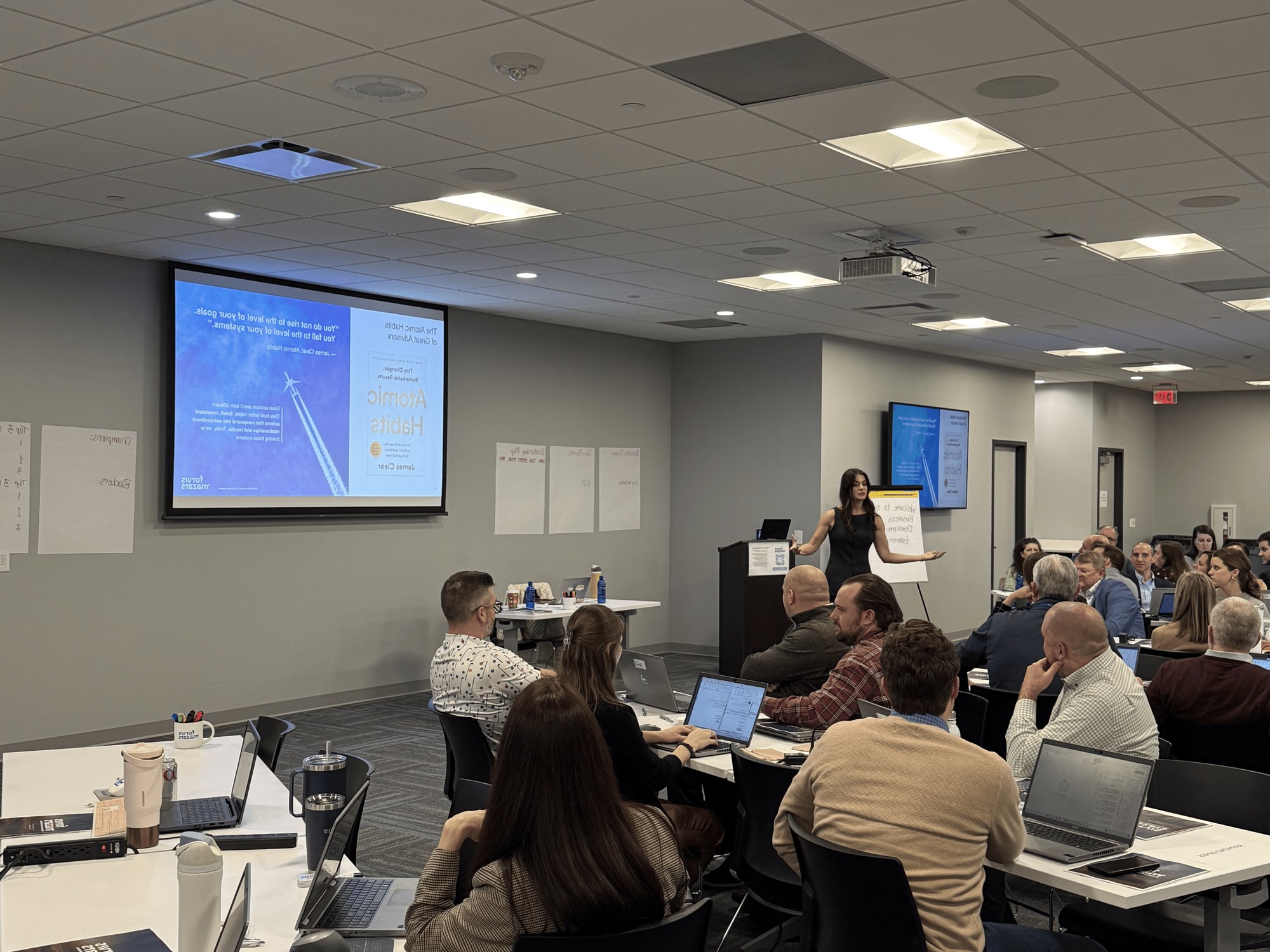
Clustr Innovations, a human-first AI enablement consultancy, builds AI literacy across all three groups. At the University of Nebraska-Lincoln, we ran hands-on AI training for College of Business faculty and an interactive student seminar with live demos and discipline-specific examples, and faculty gained confidence to bring AI into their coursework.
What does a generative AI workflow look like on campus?
Two workflows of the kind a higher education program builds first, one for teaching and one for administration. Both keep faculty or staff as the decision makers and work inside the institution's approved AI tools and academic integrity rules.
- TriggerCourse update
An instructor revises an assignment for next term.
- InputOutcomes + assignment
Learning goals, current brief and rubric.
- AI stepDraft AI-aware options
Assignment variations, disclosure note, rubric edits.
- Human reviewInstructor decides
Chooses what fits the course and integrity policy.
- OutputRevised assignment
Clear rules on how students may use AI.
- TriggerQuestion received
A student or staff member asks about a policy.
- InputHandbooks + policy pages
Published institutional documents only.
- AI stepDraft reply with source
Plain-language answer citing the policy.
- Human reviewAdministrator checks
Confirms accuracy and handles exceptions.
- OutputReply sent
Logged as a reusable answer.
Why is generative AI hard for universities to adopt well?
Generative AI is hard for universities to adopt well because students often move faster than faculty, academic integrity rules are unclear or vary by course, confidence differs widely across disciplines, and administrative teams are rarely included in AI training at all.
Students ahead of faculty
Many students already use AI daily. Faculty who have not used it cannot design assignments that account for it or teach students to use it well.
Unclear integrity rules
When every course sets different rules, or none, students guess. Programs work best with clear, shared guidance agreed with academic leaders.
Discipline differences
Accounting, marketing and management faculty need different examples. Generic demos do not show how AI fits a specific field.
Administration left out
Advising, admissions, finance and student services handle heavy document and email work, yet AI programs often focus only on teaching.
What does a generative AI literacy program for a university include?
A higher education program follows Clustr's standard sequence, adapted to faculty, students and staff: measure where people start, set safe-use and academic integrity guidance, train each group on its own work, build a few workflows, and measure again.
Baseline
A SINA assessment measures AI literacy for faculty, staff and, where useful, students before any training starts.
Safe-use rules
Agree guidance with academic leaders, IT and academic integrity teams: approved tools, what student data stays out, and how AI use is disclosed.
Role-based sessions
Hands-on faculty training with discipline-specific examples, interactive student seminars with live demos, and sessions for administrative teams.
Workflow builds
Build a small number of workflows, such as AI-aware assignments or policy replies, with the faculty and staff who own them.
Champions and re-measure
Name faculty and staff Champions in each department, then re-assess with SINA to show how far people moved.
On the AI tools your institution already approves
We teach on Microsoft Copilot, ChatGPT, Claude or Gemini, whichever your institution has licensed and approved. Training uses published course materials and policies, and student records stay out of AI tools unless your institution's rules allow it.

AI literacy across a College of Business
At the University of Nebraska-Lincoln, Clustr built AI literacy across the College of Business. Faculty took part in hands-on AI training, and students joined an interactive seminar with live demos and discipline-specific examples. Faculty gained confidence to integrate AI into their coursework. Programs are in-person first and hybrid by design, and SINA measures literacy before and after.
Trusted by teams at


















Generative AI for Higher Education, answered directly
Updated October 2026
How should faculty use generative AI in teaching?
Faculty use generative AI to design course materials, build discipline-specific examples, draft practice questions and rethink assignments so AI use is open and disclosed. Clustr Innovations runs hands-on faculty training on each instructor's own courses, so people leave with changes they can use next term.
How do universities handle academic integrity with generative AI?
The most workable approach is clear, shared guidance: which tools are approved, when students may use AI, and how they disclose it. Clustr Innovations helps set that guidance with academic leaders and integrity teams, then trains faculty to design assignments that fit it rather than relying on detection alone.
Do you train students as well as faculty?
Yes. At the University of Nebraska-Lincoln, Clustr Innovations ran hands-on AI training for College of Business faculty plus an interactive student seminar with live demos and discipline-specific examples. Training both groups means faculty and students share the same understanding of what good AI use looks like.
How do you measure AI literacy at a university?
With SINA, Clustr's AI literacy platform. SINA scores each person from 0 to 100 across five dimensions: Technical Fluency, Prompt Craft, Evaluative Judgment, Applied Use, and Ethics and Data Care. Faculty and staff take a baseline before training and a re-assessment at the end, so progress is measured rather than assumed.
Can university administrative teams use generative AI?
Yes. Advising, admissions, finance and student services teams use generative AI to draft communications, summarize policies, answer routine questions and prepare reports. Clustr Innovations sets rules with IT so student records stay out of AI tools unless institutional policy allows it, and staff review every reply.
We use cookies
We use cookies and Google Analytics to understand how visitors use our site. Privacy Policy