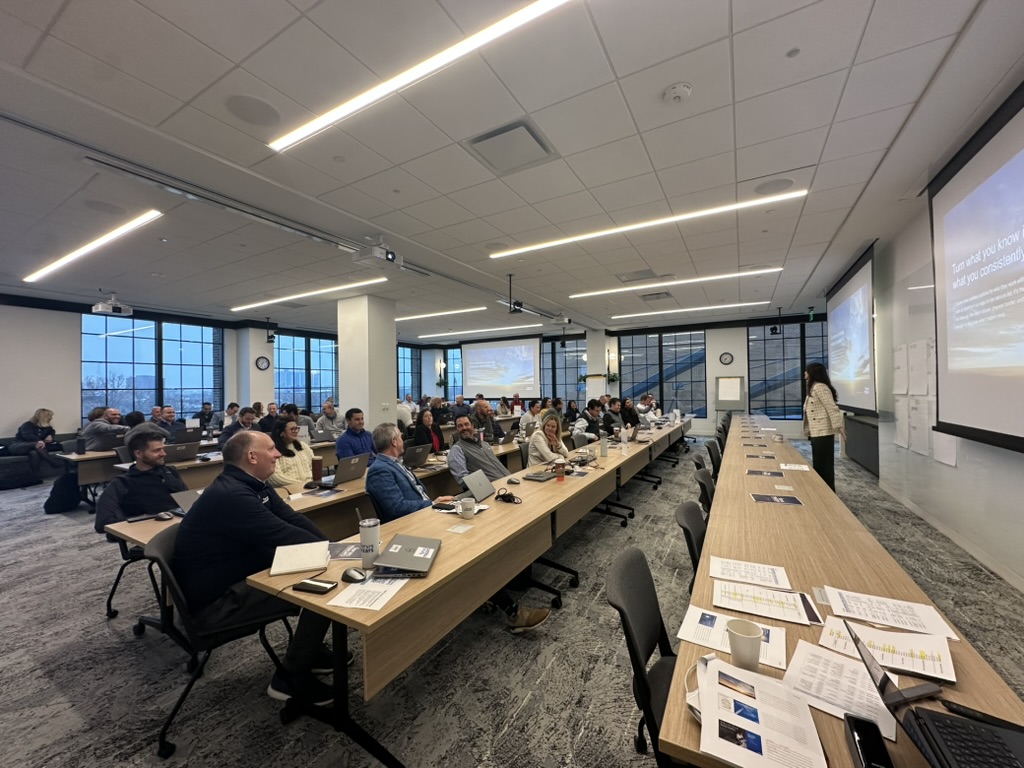
AI is a people transformation. Your function should lead it.
Most companies treat AI as a technology rollout and hand it to IT. The licenses arrive, usage stays low, and the people questions land on HR anyway: who needs which skills, how roles change, how managers lead it, and how anyone will know it worked. Clustr helps CHROs and people leaders run AI as what it is, a workforce change, starting with your people, not your tools.
The Short Answer
What is an AI workforce strategy?
An AI workforce strategy is the people side of AI adoption: which skills each role needs, how work and roles will change, how managers lead the change, and how the organization measures whether people are actually using AI well. It sits alongside the technology plan, not behind it.
For a CHRO it usually has five parts: a skills baseline by role, a role-based upskilling program, manager enablement, a network of internal champions, and adoption metrics leadership can see. Clustr runs all five with SINA, our AI literacy platform, as the baseline and the measure.
Why It Lands on HR
Why AI adoption is a people problem first
The technology usually works. What stalls is everything the people function owns.
Licenses bought, habits unchanged
Seats go live across the company, a few enthusiasts run with them, and most people go back to the old way of working. Access was never the bottleneck; skill and confidence were.
Nobody owns the skills gap
IT owns the tools and L&D owns the courses, but no one owns whether each role can do its work with AI. Without a baseline, there is no way to know where the gap is.
Managers are left out
Employees take their cue from their manager. When managers are not shown how to lead with AI, set expectations and review AI-assisted work, adoption stalls one team at a time.
Fear goes unaddressed
People wonder what AI means for their role. Silence reads as a threat. A clear story about how roles evolve, told by the people function, turns anxiety into participation.
No measure the board will trust
Completion rates and seat counts do not show capability. Leadership needs to see skill and usage move by team, so the next investment is a decision, not a guess.
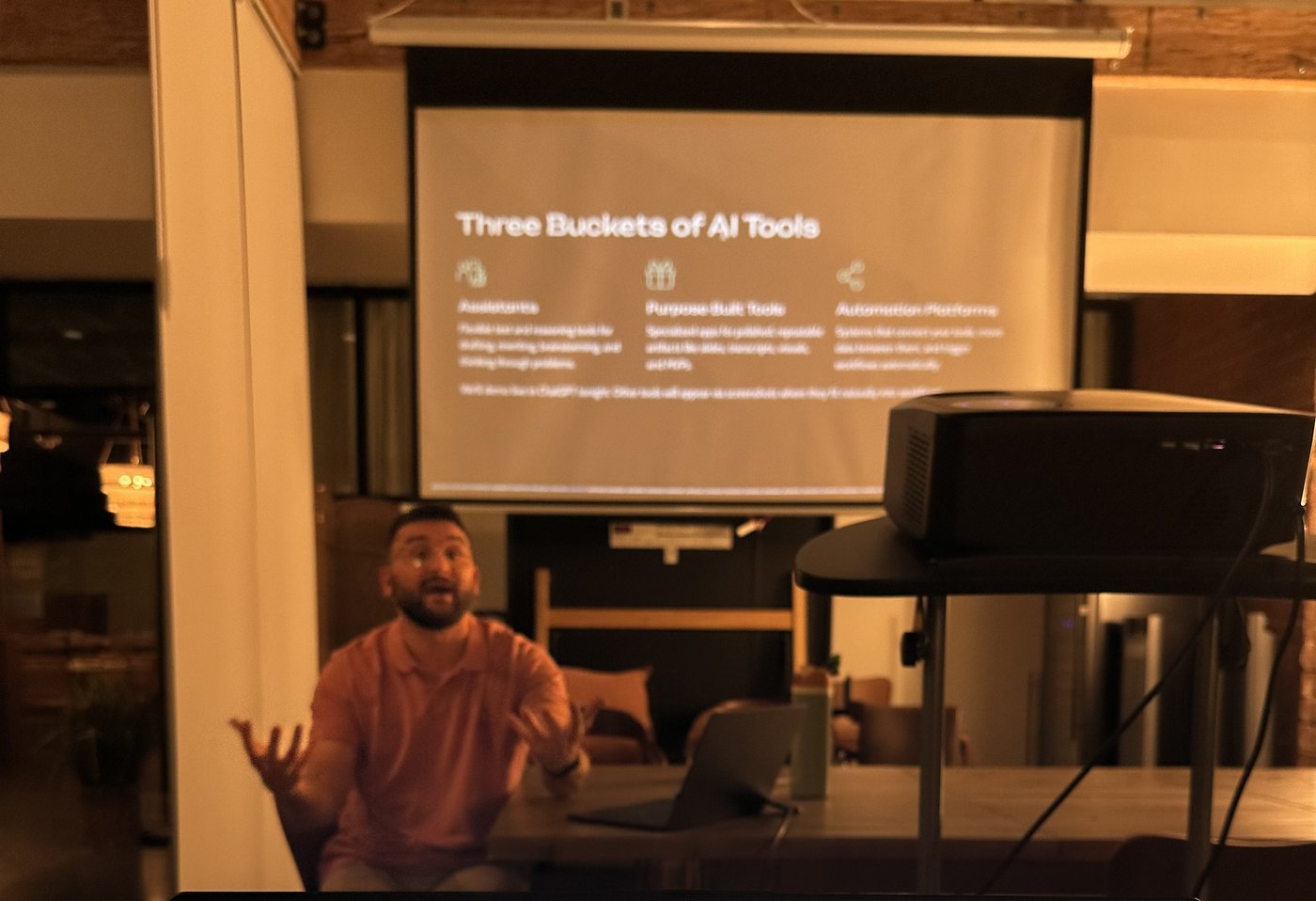
Community session · three buckets of AI tools
The Program
How we run it with your people team
Five phases, run alongside HR, L&D and your executive sponsor, typically over about 90 days for the first wave.
Baseline the workforce with SINA
Every participant is assessed on AI fluency before anything is scheduled. You see the skills gap by role, team and level, so the program starts from evidence.
Set the people story and the guardrails
We help your people team and leadership agree on how roles will change, what good AI use looks like, and the safe-use rules employees need to hear from you.
Upskill by role, on real work
Live, instructor-led sessions on the platforms you already license, built around each role's documents and workflows. In person first, hybrid by design.
Enable managers and build champions
Managers learn to lead and review AI-assisted work; a champions network carries skills peer to peer after the sessions end.
Measure and scale team by team
SINA re-measures capability and leadership sees adoption by team. The next wave goes where the data says it will matter most.
Two Ways to Run It
AI as a technology rollout vs a people transformation
Both start with the same licenses. They end in very different places.
| Technology rollout | People transformation | |
|---|---|---|
| Owner | IT, with HR informed | The people function, with IT and the business |
| Starting point | Licenses and access | A skills baseline by role |
| Training | A launch webinar and a course library | Role-based sessions on real work, plus manager enablement |
| Change management | An announcement email | A people story, guardrails and champions |
| Success measure | Seats activated | Capability and daily use, measured by team |
Measured
Adoption you can see on a chart
Every engagement is baselined with SINA, our AI literacy platform, and re-measured as the program runs. Leadership sees fluency by role, usage over time, and where to invest next.
AI adoption · pilot to daily use · 90-day program
Baselined with SINA, re-measured at week 12. Adoption is the deliverable.
Every Major Platform
On the platforms your company already licenses
We are platform-agnostic. Your people learn on Microsoft Copilot, ChatGPT, Claude or Gemini, whichever your organization has approved.

Proof
People-first programs at real companies
At Forvis Mazars, our regional, CPE-accredited workshops trained 300+ professionals and drove adoption of the firm's existing AI investments, including Microsoft Copilot. At Cresa, a leading North American commercial real estate firm, we ran an AI fluency and workflow enablement program on their ChatGPT Enterprise rollout, baselined and measured with SINA.
Trusted by teams at


















AI tool guides
Comparing tools before you train on them?
See every comparison and review in our AI tool guides.
Common Questions
AI Workforce Strategy for CHROs, answered directly
Updated November 2026
Why should the CHRO own AI adoption?
Because the hard parts are people questions: skills by role, how jobs change, how managers lead, and how employees feel about it. IT can make the tools available; only the people function can make them part of how work gets done. The strongest programs are run by HR and L&D with IT and the business as partners.
What should an AI workforce strategy include?
A skills baseline by role, a role-based upskilling program on the tools you license, manager enablement, a champions network, clear safe-use guardrails, and adoption metrics leadership can see. Clustr runs all of these, using SINA, our AI literacy platform, to baseline and re-measure.
How do you handle employee fear about AI and jobs?
By saying something clear early. We help the people team and leadership agree on how roles will evolve and what good AI use looks like, then teach people to use AI on their own work. Confidence comes from competence: once people see AI take the tedious parts of their job, anxiety usually turns into participation.
How do we measure whether the workforce is actually using AI?
With a baseline and a re-measure. SINA assesses AI fluency per person before the program and again after, and adoption is tracked by team. Leadership sees capability and usage move, not course completions.
How long does an AI people transformation take?
The first wave typically runs about 90 days from baseline to re-measure. Most organizations then scale team by team, using the data from the first wave to decide where to go next.
Do you work with our L&D team or replace it?
We work with it. L&D keeps ownership of the learning strategy; we bring the AI expertise, the live instruction on real work, and the measurement. Many clients keep a course library for breadth and use Clustr where capability has to show up in the work.
Ready when your team is
Tell us where your team is today. We'll map the fastest path from licenses to daily use.
We use cookies
We use cookies, Google Analytics, and business visitor identification (Apollo) to understand how visitors and companies use our site. Privacy Policy