What Should AI Training for a SaaS Sales Team Cover?
What should AI training for a SaaS sales team cover?
It should follow a real deal from start to finish: researching accounts, building outreach, preparing for meetings, managing pipeline, and reviewing deals, all on the seller's own accounts. Good training teaches reusable patterns rather than tool features, uses the AI tools the company already approves, and ends with a personal system each seller keeps using. Measure fluency before and after.
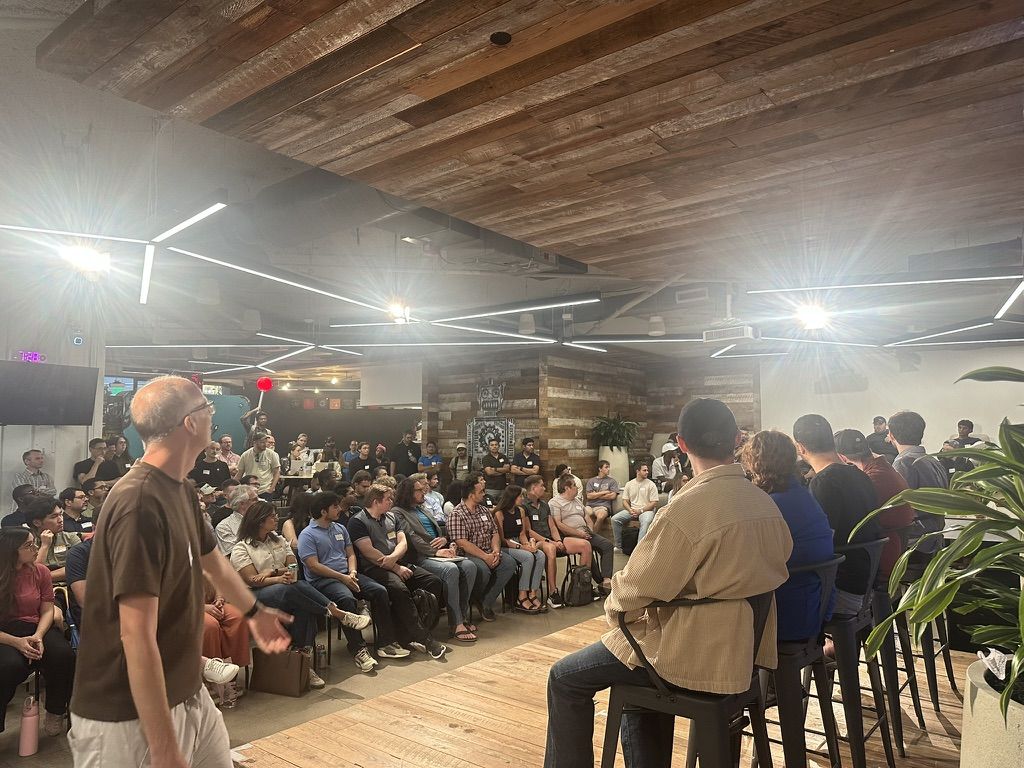
That is the shape of the AI-Native GTM Cohort, a live virtual program we ran from July 21 to August 25, 2026. It included individual sellers and GTM professionals from software companies such as RingCentral and Aiven, the Helsinki-based open-source data platform company. These were individuals in a shared cohort, not company-wide programs at either firm.
Why do SaaS sales teams lag behind on AI?
At many software companies, AI adoption starts with engineering and product. Sellers get a license and a launch message and are left to work out the rest. Quota-carrying reps will not stop selling to learn a tool, and generic prompts produce generic research that technical buyers ignore. Training has to fit inside the sales cycle to stick.
There is also tool sprawl. CRM add-ons, sales engagement platforms, and chat assistants each do one thing. What sellers usually lack is a simple system that connects research, outreach, and deal review, so the work they do in one step carries into the next.
What did the AI-Native GTM Cohort curriculum include?
Eleven live sessions over six weeks: a kickoff, six master trainings, three hands-on labs, and a closing showcase, on Tuesdays and Thursdays at 12pm ET, about 11.5 hours of live time. Each session built on the last, so participants finished with a working AI system for their own sales motion. Every lab used a real target account or a real open deal.
- AI patterns for go-to-market. The kickoff and first master training covered the AI landscape and the patterns the program is built on, each shown with a live sales demo.
- Account research at scale. Participants researched a real target account and kept it in a persistent project workspace that improves with each use. Lab 1 turned it into a working research brief.
- Configured outreach. Each person built an outreach tool loaded with their ICP, positioning, and example emails, then a multi-channel sequence of three emails and two LinkedIn touches for real accounts.
- Pipeline and meeting prep. Multi-turn deal-prep threads gather context and get sharper with each turn, ahead of real meetings.
- Forecasting, deal review, and coaching. AI for pipeline health, at-risk deals, forecasting discipline, and rep coaching briefs.
- Live deal review lab. Lab 3 ran a real open deal through everything built so far.
- A personal AI GTM operating system. The final master training covered closing and renewal, and assembling the pieces into one system each seller keeps using.
Why teach patterns instead of tool features?
Tools change quickly, and sales teams use several at once. Patterns such as persistent research workspaces, configured tools, and multi-turn deal threads work across ChatGPT, Claude, Microsoft Copilot, or Gemini. A seller who understands the pattern can apply it in whichever approved tool fits the task, and keep using it as the tools themselves change.
CRM AI features are useful inside the CRM. The patterns sit underneath them, so a seller can recognize when a configured tool or a deal-prep thread would do a better job than a one-off prompt.
How did sellers from RingCentral and Aiven use the training?
Individual team members from RingCentral and Aiven joined the cohort alongside sellers from Elire and R Cubed. Like every participant, they applied the curriculum to their own accounts and deals. We name these companies because their people trusted us with a seat, not to claim company-wide engagements, and we do not report outcome numbers for the cohort.
For Aiven, the technical product and technical buyer shaped how the patterns were applied. Loading positioning, ICP, and example messaging into a configured tool is what makes output usable for a technical audience. The Aiven story covers that one participant's path through the program. One person is a small sample, and we treat it as a useful pattern rather than proof of anything at company scale.
How do you keep CRM and customer data safe in sales AI training?
Do not connect training to production systems. In the cohort, Clustr connected to no participant's CRM, data sources, or internal systems. Workflows were shown on our own examples, and participants set them up in their own approved tools, in line with their IT and security teams. Cohorts were curated so no two companies competed, and participants controlled what they shared.
How do you measure whether sales AI training worked?
Start with a baseline. Every cohort participant took a SINA assessment before the first session and a re-assessment at the end. SINA is our AI literacy platform. Beyond fluency, look at the work: are sellers still using research briefs, configured outreach tools, and deal-prep threads on live deals weeks later? Attendance alone tells you very little.
At the closing showcase, each participant presented the workflow they were proudest of, saw their SINA re-assessment, and received a LinkedIn credential. The showcase matters because explaining a workflow to peers is a good test of whether someone can keep using it alone.
Should a SaaS company start with a cohort or a team program?
Sending one or two sellers to a cohort is a low-risk way to test whether AI changes their week. The cohort is capped at 12 people from curated, non-competing companies. For a whole sales, customer success, or marketing team, a company program adds a SINA baseline for everyone, role-based sessions on your own work, and a champions group.
A cohort is often how a team program begins. The patterns and tools one participant builds can be shared with their team, which gives leaders something concrete to evaluate before committing more people. Our page on AI training for software companies explains the company program, and the AI-Native GTM Cohort case study shows the full cohort curriculum. For sales teams outside software, see AI training for sales teams.